Blog
Blog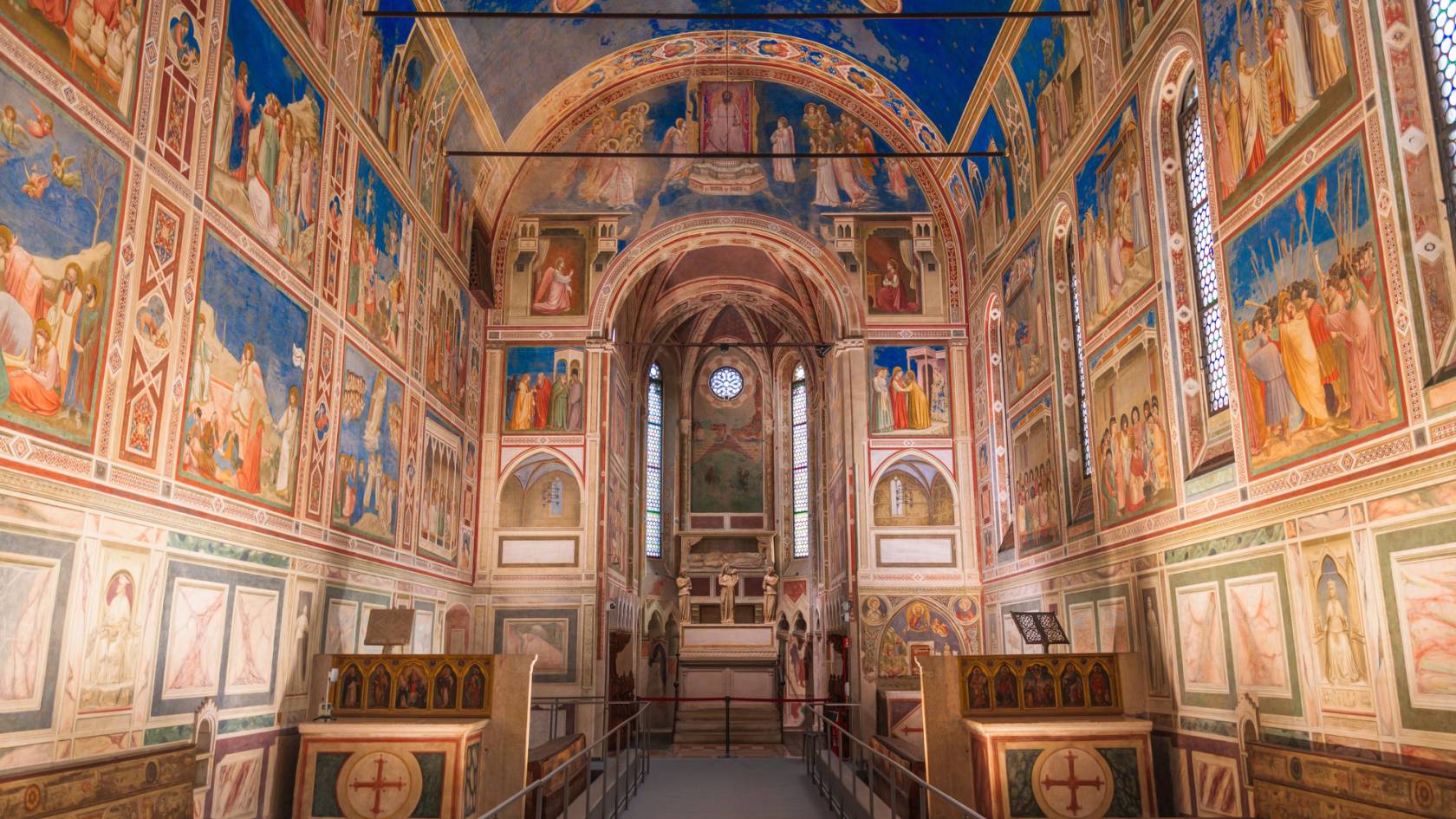
In the heart of Padua stands one of the world’s greatest artistic treasures: the Scrovegni Chapel. Simple and modest on the outside, the chapel conceals within its walls a masterpiece by Giotto that is widely considered one of the foundations of modern painting.
Stepping inside the chapel means witnessing an artistic revolution that took place more than seven centuries ago.
The Story Behind the Chapel
The chapel was commissioned in the early 14th century by Enrico Scrovegni, a wealthy Paduan banker from one of the city’s most influential families. Built beside the family palace, it served as a private oratory.
Many historians believe the project also had a spiritual purpose: to redeem the family’s reputation, which was associated with usury — a practice heavily condemned during the Middle Ages.
To decorate the interior, Scrovegni entrusted the work to Giotto, already recognized as one of the most innovative artists of his time.
Giotto and the Revolution of Painting
Between 1303 and 1305, Giotto created a fresco cycle that would forever transform Western art.
Before Giotto, medieval painting was largely symbolic and static. Figures appeared rigid, distant, and detached from real human emotion. In the Scrovegni Chapel, however, people suddenly became alive.
Faces express grief, fear, tenderness, and astonishment. Bodies occupy believable space. Scenes unfold like real human dramas rather than abstract religious symbols.
For many art historians, this is where modern painting truly begins.
The Fresco Narrative
The walls of the chapel tell the stories of the Virgin Mary and the life of Christ through dozens of interconnected scenes painted with extraordinary emotional depth.
Among the most famous are:
- The Kiss of Judas, filled with dramatic tension;
- The Lamentation over the Dead Christ, considered one of the most emotional scenes in art history;
- The Adoration of the Magi, which includes one of the earliest realistic depictions of Halley’s Comet.
Every detail contributes to a cinematic narrative that guides visitors through the entire space.
Above it all shines the chapel’s iconic deep blue ceiling covered in golden stars — one of the most recognizable images in Italian art.
The Last Judgment
The entire entrance wall is dominated by Giotto’s monumental Last Judgment, one of the most powerful images of medieval Europe.
At the center, Christ judges humanity while heaven, hell, angels, saints, and condemned souls surround him in dramatic movement. At the bottom of the fresco, Enrico Scrovegni himself appears offering the chapel to the Virgin Mary.
Even today, the scene remains striking for its emotional intensity and visual modernity.
A UNESCO World Heritage Site
The Scrovegni Chapel is part of the UNESCO World Heritage site “Padua’s Fourteenth-Century Fresco Cycles,” recognized in 2021 for its extraordinary contribution to the development of Western art.
Giotto’s influence extended far beyond Padua. Without the innovations introduced here, it would be difficult to imagine the later achievements of artists such as Masaccio, Michelangelo, or Raphael.
Why Visit Today
Visiting the Scrovegni Chapel is more than simply admiring a famous artwork. It is an encounter with the moment European painting began to speak the language of real human emotion.
Even today, the frescoes feel astonishingly alive. Giotto’s faces, gestures, and colors continue to communicate across centuries with remarkable immediacy.
It is one of those rare places where history, spirituality, and artistic genius come together in perfect harmony — and where the past still feels profoundly present.