Blog
Blog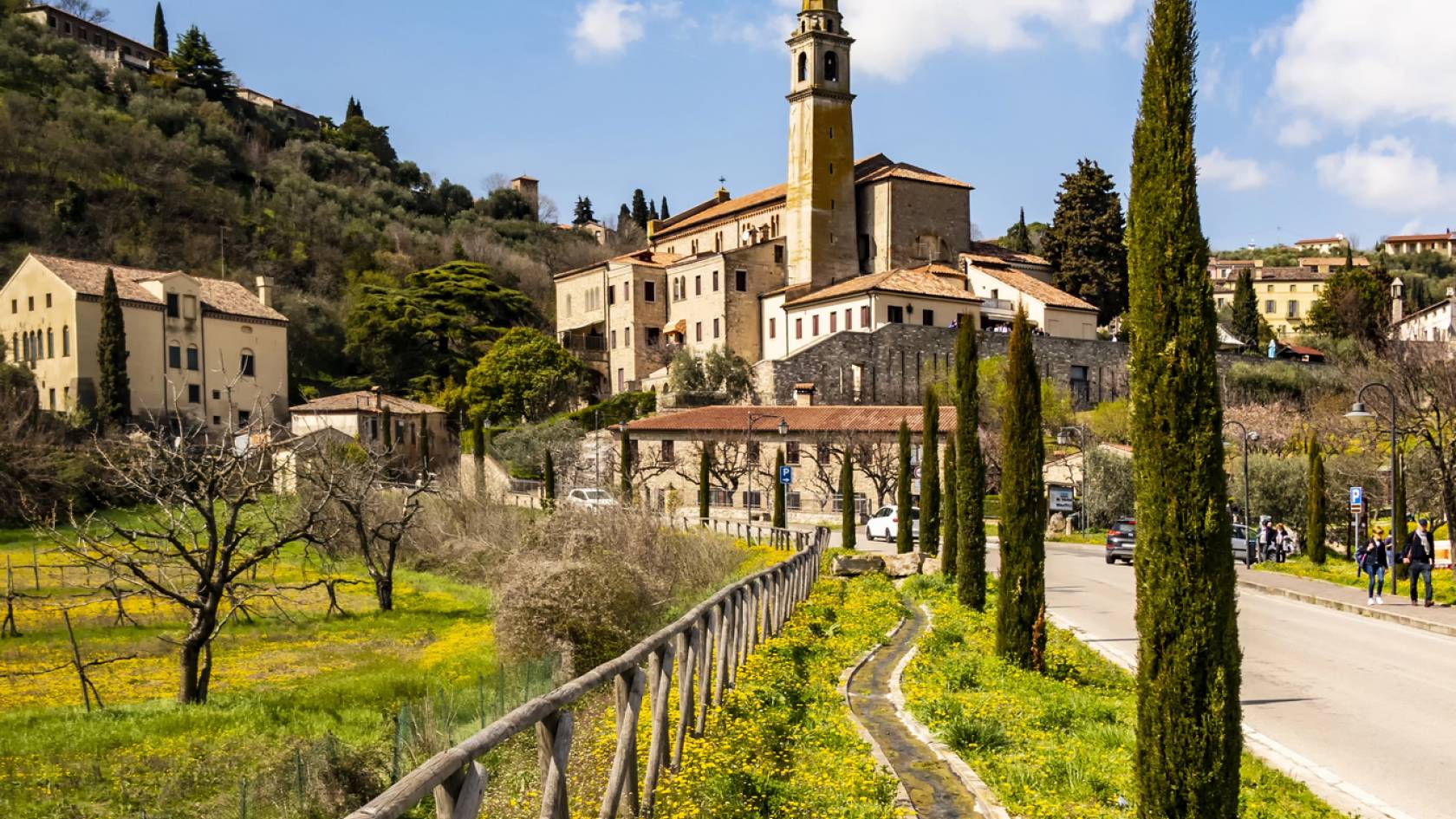
While Padua is famous for its university heritage, Giotto’s frescoes, and the world’s oldest botanical garden, the surrounding countryside hides another treasure: a constellation of medieval villages where stone walls, castles, cobbled streets, and ancient traditions still define everyday life.
Within less than an hour from Padua, travelers can discover some of the most fascinating historic towns in northern Italy — places where Venetian history, rural culture, and medieval architecture blend into an authentic experience far from mass tourism.
Arquà Petrarca
— The Village of the Poet
Nestled in the Euganean Hills, Arquà Petrarca is often considered one of the most beautiful villages in Italy. Its fame is closely tied to the poet Francesco Petrarca, who spent the last years of his life here during the 14th century.
Stone houses climb gently along narrow streets lined with flowers, wine shops, and olive trees. The atmosphere feels suspended in time. Visitors can explore Petrarch’s house, medieval fountains, and panoramic viewpoints overlooking the rolling hills of Veneto.
Arquà is especially magical in autumn, when the village celebrates its famous jujube festival and the vineyards turn golden.
Montagnana
— One of Europe’s Best Preserved Walled Towns
Few places in Italy preserve medieval fortifications as perfectly as Montagnana. Surrounded by nearly two kilometers of intact city walls and 24 defensive towers, the town looks almost untouched since the Middle Ages.
Built under the rule of the Carraresi family and later controlled by Venice, Montagnana became a strategic military outpost. Today, visitors can walk along the walls, explore the Rocca degli Alberi castle, and admire elegant Renaissance palaces hidden behind fortified gates.
The town is also famous for its Prosciutto Veneto PDO, making it an ideal destination for combining history with local gastronomy.
Este
— Castles and Ancient Origins
At the southern edge of the Euganean Hills lies Este, one of the oldest settlements in the Veneto region. Long before the Romans arrived, the area was inhabited by the ancient Veneti civilization.
The town is dominated by the impressive Castello Carrarese, surrounded by massive walls and a scenic moat. Inside the historic center, visitors find elegant piazzas, cafés, and archaeological museums that reveal centuries of layered history.
Este also serves as a perfect gateway for exploring the Euganean Hills Regional Park, famous for vineyards, thermal spas, and cycling routes.
Cittadella
— The Medieval City You Can Walk Above
Cittadella offers one of the most unique medieval experiences in Italy: a fully walkable patrol path atop its fortified walls.
Founded in the 13th century by Padua as a military stronghold, the city still retains its perfectly elliptical defensive structure. Walking along the restored walls provides panoramic views over rooftops, countryside, and distant mountains.
Inside the walls, visitors discover quiet squares, artisan shops, and traditional Venetian architecture that preserve the town’s authentic character.
Monselice
— A Medieval Pilgrimage Town
Monselice rises dramatically around a rocky hill crowned by a medieval fortress. Over centuries, the town became both a strategic stronghold and an important religious destination.
One of its most distinctive landmarks is the Sanctuary of the Seven Churches, a pilgrimage route inspired by Rome’s sacred itineraries. The medieval castle complex, filled with historic weapons and noble interiors, offers a fascinating glimpse into aristocratic life during the Renaissance.
The combination of castles, vineyards, and spiritual history makes Monselice one of the most atmospheric towns near Padua.
Why Explore the Villages Around Padua?
Many travelers visit Venice or Padua without realizing how rich the surrounding Veneto countryside truly is. These medieval villages offer a slower, more intimate Italy — one made of local traditions, ancient recipes, quiet piazzas, and landscapes shaped over centuries.
Whether you are interested in architecture, history, food, cycling, or simply discovering lesser-known destinations, the area around Padua offers an extraordinary journey through the heart of medieval northern Italy.