Blog
Blog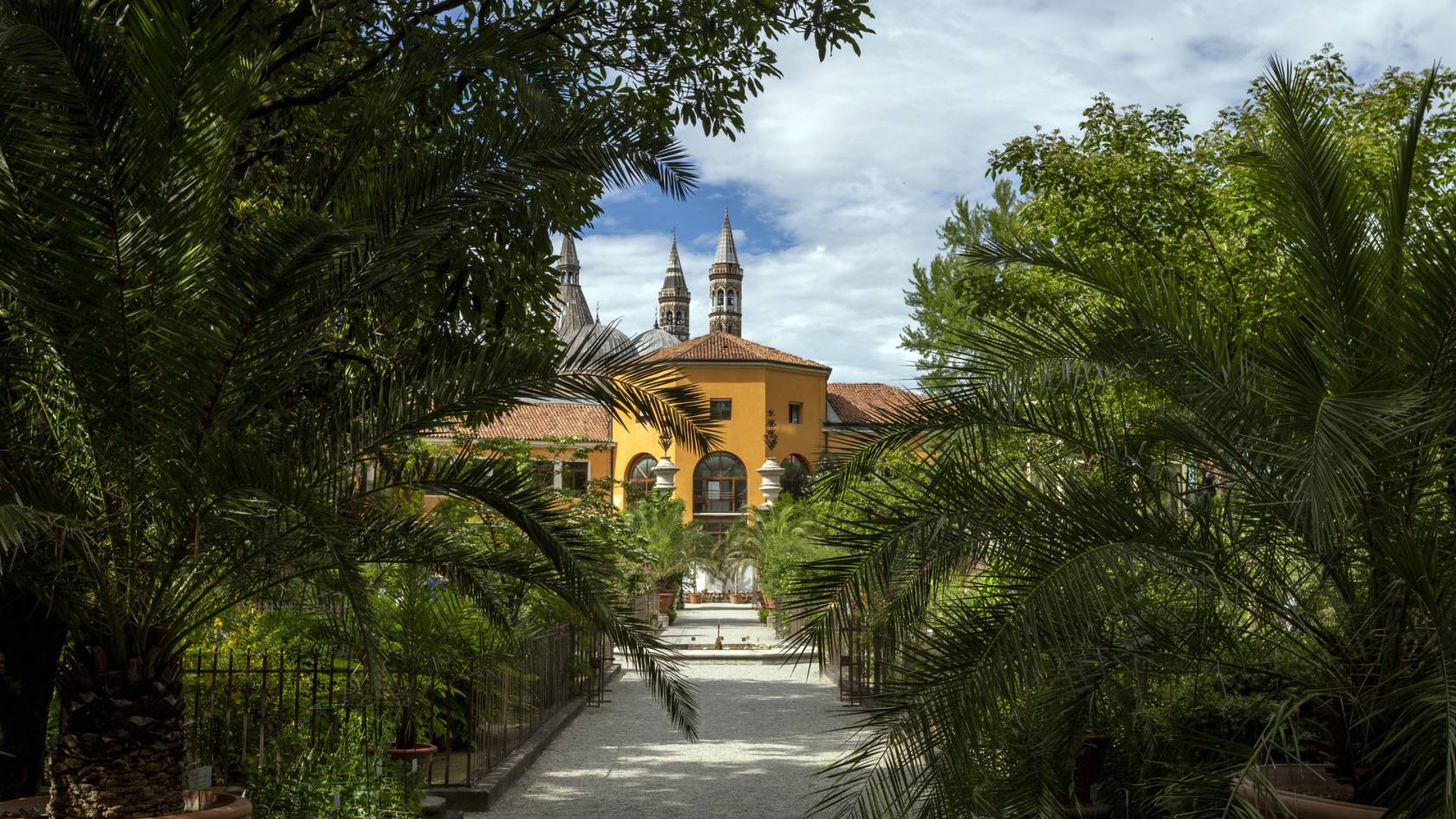
In the heart of Padua, between Prato della Valle and the Basilica of Saint Anthony, lies a place that transformed humanity’s relationship with nature forever: the Botanical Garden of Padua. Founded in 1545 by the Republic of Venice, it is recognized as the world’s oldest university botanical garden still located in its original site. (ortobotanico1545.it)
But this is far more than a historic garden. It is the birthplace of modern botanical science — a living laboratory that, for nearly five centuries, has welcomed scholars, physicians, pharmacists, and travelers from across Europe.
A Garden Created for Medicine
In the 16th century, accurately identifying medicinal plants was essential. Mistakes, counterfeits, and confusion could have serious consequences for patients. To solve this problem, the University of Padua created a hortus medicinale — a “garden of simples” dedicated to the direct study of plants used in medicine. (ortobotanico1545.it)
For the first time, students could observe living plants instead of relying only on ancient manuscripts. This marked a revolutionary shift in knowledge: science based on observation, experimentation, and classification.
It is difficult today to fully appreciate how groundbreaking this idea truly was.
The Symbolism of the Hortus Cinctus
The original structure of the garden remains visible today. At its center lies a perfect circle enclosed within a square — a design inspired by Renaissance ideals of harmony between humanity and the universe. Surrounding the garden is a ring of water symbolizing the ocean. (whc.unesco.org)
The entire complex was protected by walls, not only for aesthetic reasons but also to prevent the theft of valuable medicinal plants, which was surprisingly common at the time. (apartmentspadova.it)
Walking through its pathways today, visitors can still sense the balance between scientific rigor and philosophical vision that defined the Italian Renaissance.
Rare Plants, Exploration, and Discovery
Thanks to Venice’s vast trade network, Padua’s botanical garden quickly became one of Europe’s most important centers for introducing exotic plant species. Plants from Asia, Africa, and the Americas arrived here to be studied, catalogued, and cultivated — many for the first time in Europe. (en.wikipedia.org)
Among the garden’s most famous specimens is the “Goethe Palm,” planted in 1585 and still alive today. The German poet Johann Wolfgang von Goethe admired the tree during his Italian journey and later referenced it in his studies on plant metamorphosis. (en.wikipedia.org)
The garden also preserves ancient ginkgo trees, historic magnolias, and botanical collections that tell centuries of scientific exploration.
A UNESCO World Heritage Site and a Laboratory for the Future
In 1997, the Botanical Garden of Padua became a UNESCO World Heritage Site. UNESCO described it as “the origin of all botanical gardens in the world” and recognized its contribution to the development of modern scientific disciplines, including botany, medicine, chemistry, and pharmacology. (whc.unesco.org)
Yet the garden is not simply a monument to the past.
In 2014, the Garden of Biodiversity was added — a contemporary extension featuring advanced greenhouses that recreate different global biomes, from tropical rainforests to arid environments. The project focuses on climate change, sustainability, and the conservation of plant diversity. (ortobotanico1545.it)
The garden continues to fulfill the same mission it began centuries ago: teaching humanity about its connection with nature.
Why Visit Today
Visiting Padua’s Botanical Garden means stepping into a place where history, science, and beauty coexist. It is not only a destination for botanists or academics — it is a cultural experience for anyone curious about how knowledge evolves.
Here, you realize that modern science was shaped not only in laboratories and observatories, but also by carefully observing a leaf, studying a root, or documenting the life cycle of a medicinal plant.
In an age dominated by speed and technology, the Botanical Garden of Padua still offers a timeless lesson: true knowledge begins with curiosity, patience, and wonder.